The Psychology Behind Real Estate Digital Marketing

The Psychology Behind Real Estate Digital Marketing
You know the feeling. You're scrolling through your social media feed, and suddenly, your thumb comes to a stop. A stunning video of a sun-drenched living room with floor-to-ceiling windows takes over your screen. The captions promise a sneak peek into a home with a 'secret' garden oasis. You click. You swipe. Before you know it, you're on a virtual tour, imagining your morning coffee on that patio. You haven't even met an agent, and you're already in love.
This isn't just good marketing. It's applied behavioral psychology.
In the constantly changing world of real estate, the boundary between digital and physical has blurred. The journey to a new home no longer starts with a phone call or an open house flyer. It begins with a search, a scroll, or a short video. Yet, many real estate professionals still treat digital marketing as a technical chore — a checklist of SEO keywords, ad spend, and website analytics. They pour resources into the "what" (ads, listings, content) without ever truly understanding the "why" behind human behavior.
The truth is, converting a digital lead into a real-world buyer or renter isn't about outspending the competition. It's about outsmarting them. It's about tapping into the powerful psychological drivers that guide every decision we make, especially one as emotionally charged as selecting the place you will call home.
Awareness Scarcity: The Battle for the Thumb
Before we can even talk about converting leads, we need to address the most critical resource in today's digital age: attention. Our brains are under constant assault from a firehose of information. We've developed a defense mechanism—a cognitive filter that makes us scroll past anything that doesn't immediately grab us. This is Awareness Scarcity, and it's the first hurdle you have to clear.
This is where traditional, long-form content often fails. The average person's attention span has shrunk to a few seconds, particularly among mobile-native audiences like Gen Z and Millennials, according to a recent article by Microsoft. They've been trained to scroll until they find that one piece of content that provides a small hit of dopamine. Your job is to be that hit.
Enter the "thumb-stopping" hook. Your digital content, especially on platforms like TikTok, Instagram Reels, and YouTube Shorts, must interrupt that mindless scrolling. It has to be captivating from the very first frame. Think of it as a three-part formula:
- Hook (1-3 seconds): Start with an electrifying question ("Is this the craziest kitchen in Denver?") or a jaw-dropping visual. The goal is to immediately create curiosity.
- Value (3-15 seconds): Deliver on the promise of the hook. This is a quick, digestible tour of a unique feature, a pro tip for buyers, or an answer to a common question. Don't waste time—show them something valuable they can't get anywhere else.
- Call-to-Action (CTA): Tell them exactly what to do next. "DM me 'SHOWING' for a private tour," "Comment below with your dream neighborhood," or "Link in bio for the full tour." Make it simple, clear, and easy.
And here’s the secret sauce: authenticity. These platforms don’t reward overly polished, corporate-style videos. They thrive on personality, genuine storytelling, and a feeling that the person on the screen is a real, trusted human, not a car salesman.
Emotional Anchoring: Selling the Feeling, Not the Foundation
Once you've stopped the scroll and captured their attention, it's time to build a deeper connection. The principle of Emotional Anchoring states that our first exposure to something creates a powerful, lasting impression. In real estate, this means that your early-stage digital content is your most critical asset.
A stunning virtual tour, a beautifully produced lifestyle video, or an engaging video short about the neighborhood isn’t just showcasing a property; it's creating an emotional anchor. It allows the prospect to fall in love with a home before they ever set foot in it. They aren't just seeing a floor plan; they are envisioning their life there. They're picturing their kids playing in the backyard or hosting dinner parties in that perfect dining room.
When a potential buyer is already emotionally invested, future objections become far less impactful. The price tag, a few scuffs on the walls, or a minor repair are no longer deal-breakers. They are just small obstacles on the way to their dream. You’ve anchored their decision-making in emotion, not logic.
The Scarcity Principle: The Fear of Missing Out
We are all fundamentally driven by the fear of loss. The Scarcity Principle is a powerful psychological lever that can be ethically leveraged to create a sense of urgency and compel action. “Scarcity doesn’t just affect our thoughts; it also causes physical responses. Digital marketing research has shown that when people encounter scarce items, their heart rate can increase, their palms may sweat, and their focus sharpens (Schwartz, 2019). This is due to reactance theory, which explains that when our freedom to choose is threatened—for example, by the possibility of missing out on a deal—we’re motivated to act quickly to restore that freedom” as CEO of Market Mindshift explains. It's about making prospects feel like they might miss out on a once-in-a-lifetime opportunity.
On the digital front, you can use scarcity in a few key ways:
- Limited Availability: Instead of an open house, create "limited open house slots" or "VIP showing appointments." By making the resource scarce (your time and the access to the property), you increase its perceived value.
- Social Scarcity: Highlight the demand. Use digital messaging like "Multiple offers already received on this stunning property" or "This home is getting an incredible amount of interest!" This sends a clear signal that the property is highly desirable and that waiting could mean losing out.
- Exclusive Content: Offer access to a limited-release, "first-look" digital tour for those who sign up for your newsletter or join a private list. This makes them feel like they are part of an exclusive club and builds anticipation.
Used ethically, scarcity doesn't feel like a pushy sales tactic; it feels like a friendly heads-up. It motivates prospects to take action when they might otherwise procrastinate.
Social Proof: The Power of the Crowd
In a market where trust is paramount, Social Proof is your secret weapon. When we are uncertain, we look to the actions and opinions of others to guide our own behavior. Your past successes aren't just a list of accomplishments; they are powerful trust signals.
On your digital platforms, this means showcasing:
- Video Testimonials: Don't just show a picture and a quote. A short video of a satisfied client speaking from experience is infinitely more powerful and authentic.
- Social Media Mentions: Highlight positive comments or mentions from past renters or buyers or reshare user generated content on your social media. This is a form of organic social proof that is incredibly persuasive.
- Reviews on Public Platforms: Actively manage and encourage positive reviews on platforms like your Google Business Profile and Yelp. Google, in particular, gives preferential visibility to businesses with positive user engagement. The more high-quality reviews you have, the more the algorithm sees you as a trustworthy and authoritative business, boosting your local search ranking and making your profile one of the first things a potential client sees
Ultimately, social proof is the evidence that your track record isn't just talk; it's a reality backed by happy clients.
Cognitive Fluency: The Path of Least Resistance
Our brains are naturally lazy. We prefer experiences that are easy to process and understand. Cognitive Fluency is the principle that the easier something is, the more we like it. In digital marketing, this translates to a seamless, intuitive, and visually pleasing user experience.
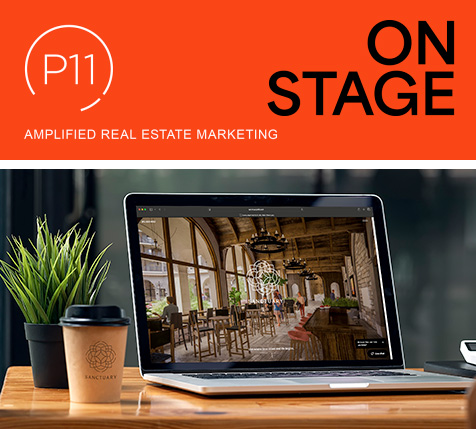
If a prospect lands on your website and can’t easily find what they're looking for, or if the load times are slow, they will leave. The friction is too high. A fluid digital experience reduces the cognitive load, making the journey from 'search' to 'tour' to “lease/buy” feel effortless and enjoyable. Check out some of P11’s recent websites that put the customer experience at the forefront of the design process.
This extends to an omnichannel approach that breaks down silos between platforms. A prospect who discovers you on Instagram, signs up for your newsletter, and then receives a personalized text about a grand opening event should feel like they are interacting with a single, unified brand. The experience should be consistent and interconnected, blending online and offline interactions to reinforce the positive impression already made.
This is where AI and automation become your best friends. An AI-powered chatbot can provide instant, frictionless answers 24/7, freeing up your time for high-value interactions. Predictive analytics can also analyze a prospect's browsing behavior to recommend the perfect home before they even know they're looking for it. These tools aren't a replacement for the human touch; they're a way to make the digital journey more fluid and personalized.
The Final Word: From Clicks to Keys
Digital marketing in real estate is not just a game of technical prowess. It’s a game of human connection. It's about understanding the deep-seated psychological triggers that motivate us to act. By embracing principles like Awareness Scarcity to grab attention, Emotional Anchoring to build a connection, The Scarcity Principle to create urgency, Social Proof to build trust, and Cognitive Fluency to create a seamless experience, you can transform your digital strategy across a variety of marketing platforms.
The goal isn't just to generate leads; it's to guide prospects on an emotional journey from their first click to the moment you hand them the keys to their new home. When you focus on the psychology behind the scroll, the click, and the sign-up, you won't just be a great marketer—you'll be a master of human connection. And that is the true key to success.
Ready to move beyond the digital game and win the human one? Contact P11 today to learn how we can help you apply these powerful principles, amplify your digital marketing efforts, and convert more leads into lifelong clients.
See How We Turn Ideas Into Results
Related Articles
Stay updated with the latest trends, strategies, and best practices in real estate marketing.




%20(1).png)

Partner with P11 to turn your real estate brand and properties into powerful marketing machines.