NEW! Apple Maps Ads for Real Estate: A Guide for Multifamily and Homebuilder Marketers
NEW! Apple Maps Ads for Real Estate: A Guide for Multifamily and Homebuilder Marketers
By Brianna Massas, VP of Digital Marketing, P11creative | November 2026
Picture this: a renter is grabbing coffee in a neighborhood they've had their eye on for their next move. They pull out an iPhone, open Maps and type "apartments." Until this year, every result on that screen was organic. Now one of those spots can be yours.
Apple has opened Apple Maps to advertisers for the first time, and for real estate marketers it's the most interesting new local search placement we've seen in years. Here's what multifamily, homebuilder and master-planned community teams need to know, minus the hype.
The quick answer: Apple Maps Ads (Apple calls them Ads on Maps) are paid listings that appear at the top of Apple Maps search results and in the Suggested Places panel. Campaign booking opened in the U.S. and Canada on August 14, 2026, and ads went live on August 21. They're bought through Apple Business or Apple Ads and billed per tap or per thousand impressions. Targeting is based on what someone searches and where they are, not on personal data.
What are Apple Maps Ads?
Apple Maps Ads let local businesses pay for top placement when people search for places nearby. Apple announced the program in March 2026 alongside Apple Business, its new all-in-one platform that replaced Apple Business Connect.
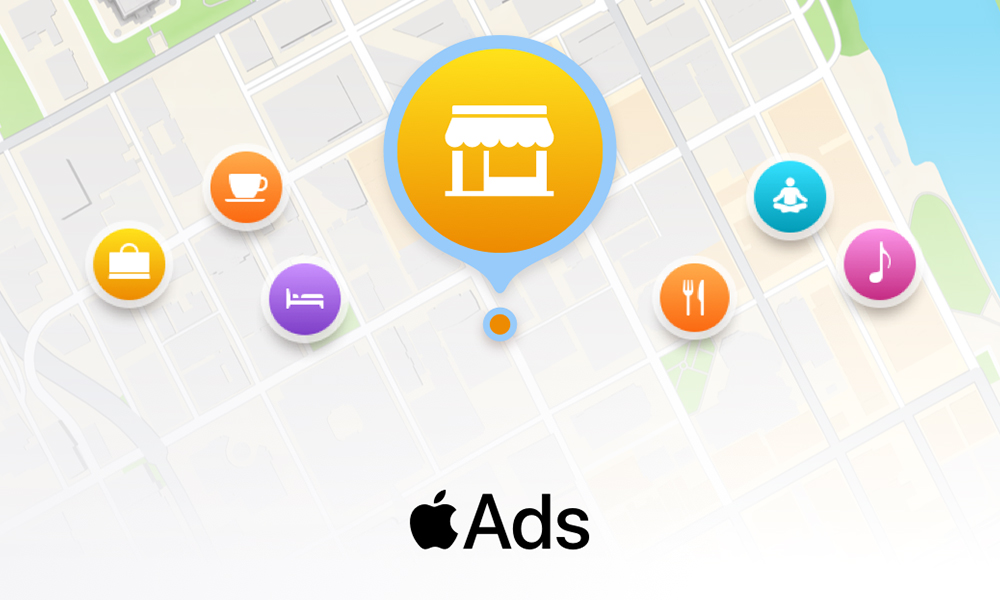
The clever part: there's no separate ad to design. Your ad is built from your location's Apple Maps place card (photos, logo, hours and contact info) plus a short line of promotional text. Depending on the search, it can appear as a one-image, three-image or text-only listing. From the ad, people can call, get directions, visit your website or flip through photos without ever leaving Maps.
Where do Apple Maps Ads appear?
There are two placements:
• Before the search. Ads can appear in suggested places: the panel people see when they open Maps and start exploring (Apple's term for it is "search home"). Think of it as a nudge before someone knows what they want.
• After the search. Ads can appear at the top of results when someone searches a category, like "apartments" or "new homes," in a specific area. This is the high-intent moment.
Apple shows only one ad per set of results, and it carries a clear "Ad" label. That scarcity is a big part of the appeal.
How does Apple Maps ad targeting work?
If you live in Meta and Google, this will feel refreshingly simple. Apple Maps Ads are contextual. They're matched to the search term, the device's approximate location, the area of the map on screen and the time of day. There are no audience lists, no retargeting and no ad data tied to someone's Apple Account.
For real estate brands, that's more than a privacy talking point. Because targeting is based on where people are and what they're looking for (not who they are), it avoids the demographic and lookalike targeting that has drawn Fair Housing scrutiny on other platforms. Your ad copy and imagery still need the usual Fair Housing review, of course.
Apple Business or Apple Ads: which one is right for you?
There are two ways to buy. Apple Business is the fully automated route: claim your location, add photos, set a budget and launch. Apple Ads gives you more control, including the ability to choose which search terms and categories trigger your ad and to add negative terms so you don't pay for the wrong searches.
Here's the detail most real estate teams will miss. Apple automatically routes organizations with more than five locations to Apple Ads, and once you move ad management from Apple Business to Apple Ads, the switch is permanent. For a management company or builder with a full portfolio, that's almost certainly your path, so plan your account structure before the first campaign goes live.
How much do Apple Maps Ads cost?
Pricing runs on an auction. With Apple's automated Maximize Engagements Strategy, you pay per tap. With Manage Bids, you set your own bids and can choose cost per tap or cost per thousand impressions. You also set a daily budget, and Apple keeps monthly spend at or below roughly 30.4 times that amount. Budgets can be adjusted and campaigns paused anytime, which makes this a low-risk channel to test.
What Apple hasn't shared yet is benchmark pricing. Nobody has years of data on what an "apartments near me" tap costs in Maps, so your first few months set the baseline.
Why should real estate marketers care?
Apple Maps is the default map app on every iPhone. Apple reports more than a billion relevant business searches a month on Maps in the U.S. and Canada and says one in two business searches ends in an action, like a call, a website visit or a request for directions. In real estate, a request for directions is about as close to a tour as digital marketing gets.
• Multifamily: Show up first when renters search for apartments in your submarket, especially during lease-up or in competitive neighborhoods where every tour counts.
• Homebuilders: Drive visits to model homes and sales centers, where foot traffic still makes the sale.
• Master-planned communities: Put your welcome or information center on the map, literally, for people exploring the area.
What's the catch?
A few honest caveats. Search volume for housing is smaller than for restaurants or retail, so think of Apple Maps Ads as a sharp, efficient channel rather than a firehose. Only businesses with a physical location qualify, so a community needs a leasing office, sales center or welcome center on the map to promote. Reporting lives inside Apple's tools and shows interactions (taps, calls, directions and website visits), not confirmed visits. And since your place card becomes your ad, it has to be in great shape.
That last point is a bonus in disguise. A claimed, polished Apple Maps listing also helps you show up in organic Maps results and in the AI-powered search experiences that pull from them, whether you advertise or not.
How do you get started with Apple Maps Ads?
1. Set up or update your Apple Business account. It's the hub for how your brand appears across Maps, Wallet and Siri. If you used Apple Business Connect, your claimed locations and place card details carried over automatically.
2. Claim and verify every location. Each community, leasing office or sales center you want to promote needs to be claimed and verified.
3. Polish your place cards. Great photos, accurate hours, the right category and a website link you can track (UTM parameters are your friend).
4. Bring in your agency. Apple offers agency access so a partner can build, run and report on campaigns for you.
Our take
At P11, we love a new channel almost as much as we love turning things up to eleven. Nobody has the Apple Maps playbook yet, and that's exactly when smart testing pays off. We're recommending a focused 90-day pilot: a modest budget, a tight set of search terms and clear measurement tied back to leads and tours.
Want to be one of the first in your market to try it? Let's talk.
APPLE MAPS ADS FAQ
Can apartment communities and homebuilders advertise on Apple Maps?
Real estate isn't on Apple's restricted list at launch. That list covers home services such as general contracting and roofing, along with alcohol, dating, gambling and a few other categories. Leasing offices, sales centers and welcome centers with a physical address are a natural fit, though every ad is subject to Apple's review.
Do I need an Apple Business account to run Apple Maps Ads?
Yes. Every location has to be claimed and verified in Apple Business before it can advertise, even if you buy through Apple Ads.
Can I target Apple Maps Ads by demographics?
No. Targeting is contextual only, and Apple doesn't share personal data with advertisers.
How much should we budget for an Apple Maps Ads test?
For a single property, a modest monthly budget over a 90-day pilot is usually enough to learn whether the channel earns a bigger role in your media mix.
GET AMPLIFIED.
Questions about Apple Maps Ads or ready to run a pilot? Contact the P11 digital team at P11.com or 949 691-3040.
See How We Turn Ideas Into Results
Related Articles
Stay updated with the latest trends, strategies, and best practices in real estate marketing.





Partner with P11 to turn your real estate brand and properties into powerful marketing machines.